Inside the Table · June 9, 2026
Your opponents remember you
The AI opponents remember how you play, across every session. Build a dossier on each one by playing them, or pay an informant to skip the grind.
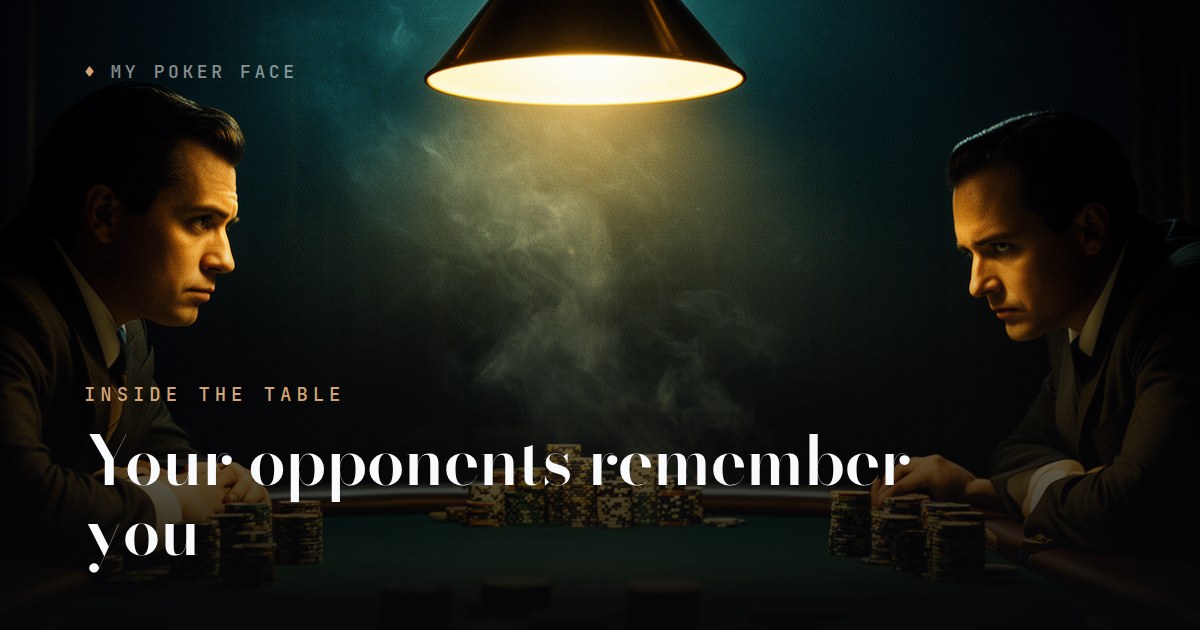
For almost three years, the AI characters in this game had no memory of you.
They had moods and attitudes. That part has been there since 2023. But the moment a game ended, everything they’d learned about how you played evaporated. Sit down at a new table against the same Blackbeard and his read of you reset to zero, every time. You could three-bet him off three pots in a row on Monday and he’d have no idea who you were on Tuesday.
Now the reads carry. Beat the same opponent across a few sessions and they start to know you, the way a regular at your home game knows exactly who shows up only with the nuts and who is capable of firing three barrels with air.
A read you earn
The reads run both ways, and yours is the dossier: a file on every opponent you have played, built from the hands you have actually logged against them.
You don’t get a full read on a stranger. Sit down against someone new and their file is mostly locked: “Insufficient observation. Play 24 more hands to open this file.” The deeper reads unlock as you play them, starting around 25 hands and filling in from there, with the sharpest reads opening up near 180.
It counts the hands where they fold, too, on purpose. A nit who folds everything shouldn’t take forever to scout. You learn something real every time they muck, so it counts.
And the lock is real. The intel you haven’t earned isn’t sitting in your browser waiting to be dug out. You have to play the hands.
Don’t want to grind? Pay an informant
If you don’t feel like putting in the hands, you can buy the read instead. Paying for a dossier section skips the grind: the “I don’t know this guy, so I’ll pay to find out who I’m sitting down against” move. The fee feeds back into the same economy that bankrolls the AI players, so the chips stay in the world.
It becomes a collection
Once you’re keeping reads on everyone you have played, those files need a home. They live in The Archive: a noir case-file aesthetic, manila folders and wax seals, the whole private-eye fantasy, folded together with the activity feed and the who-is-around view into one intel hub. The Wire, The Floor, The Files.
That turned out to be a real reason to come back. A collection you build by playing is a good one. The dossiers stopped being a stats screen and became something you accumulate.
Why a memory
The characters here have had a mood since the very beginning, a confidence and an attitude that shift while you play them. Cross-session memory is that same instinct, stretched across time. An opponent isn’t only a strategy you are up against. It’s a record of the history the two of you have. The Blackbeard who has seen you bluff him a dozen times is, in a small but real way, a different opponent than the one you just met.
Sit down, log some hands, and earn a read of your own. Take a seat, or scout the opponents you’ll be playing first.